Turning raw commercial asset packs into clean, measured 3D models — and then letting a machine build levels out of them.
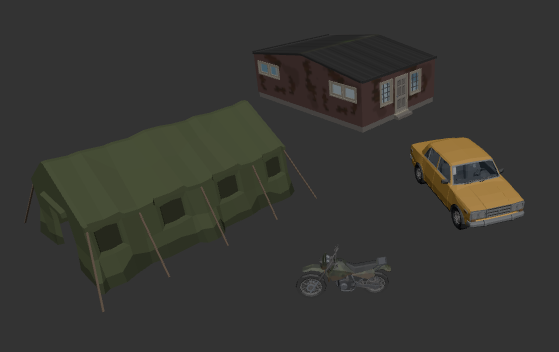
Block Forge started as a visual builder: open an asset pack in the browser, drag pieces into a 3D viewport, export the result. That editor still exists — but the centre of gravity moved twice, and each move was more interesting than the last.
First, from builder to batch converter. The genuinely hard part was never the placement UI, it was the assets themselves: broken texture references, inconsistent scales, junk hierarchies. Once that clean-up logic was pulled out into a platform-free module, a whole pack could be converted headlessly — no human in the loop, no viewport open.
Then, from converter to generator. With a folder of clean, measured models, the question becomes a different one: can a machine arrange them into a level that reads as a real place? That needs to know what each asset actually is — its footprint, its category, whether it’s a building you can enter or scenery you walk past — and asset file names tell you almost none of that reliably. So the project grew a two-layer knowledge model, measured data underneath and curated judgement on top, and a generator that lays out levels from it.
It is, in the end, a small study in machine spatial reasoning: giving software enough understanding of objects and space to make decisions a level designer would otherwise make by hand.